RAM Price Hike 2026: Why It Happened, What's Next
The 2026 RAM price hike pushed a 32GB DDR5 kit past $400. Here is what drove DRAM prices up, who pays for it, and when memory costs may finally start to ease.
By Supun Bandara · September 1, 2026 · 9 min read
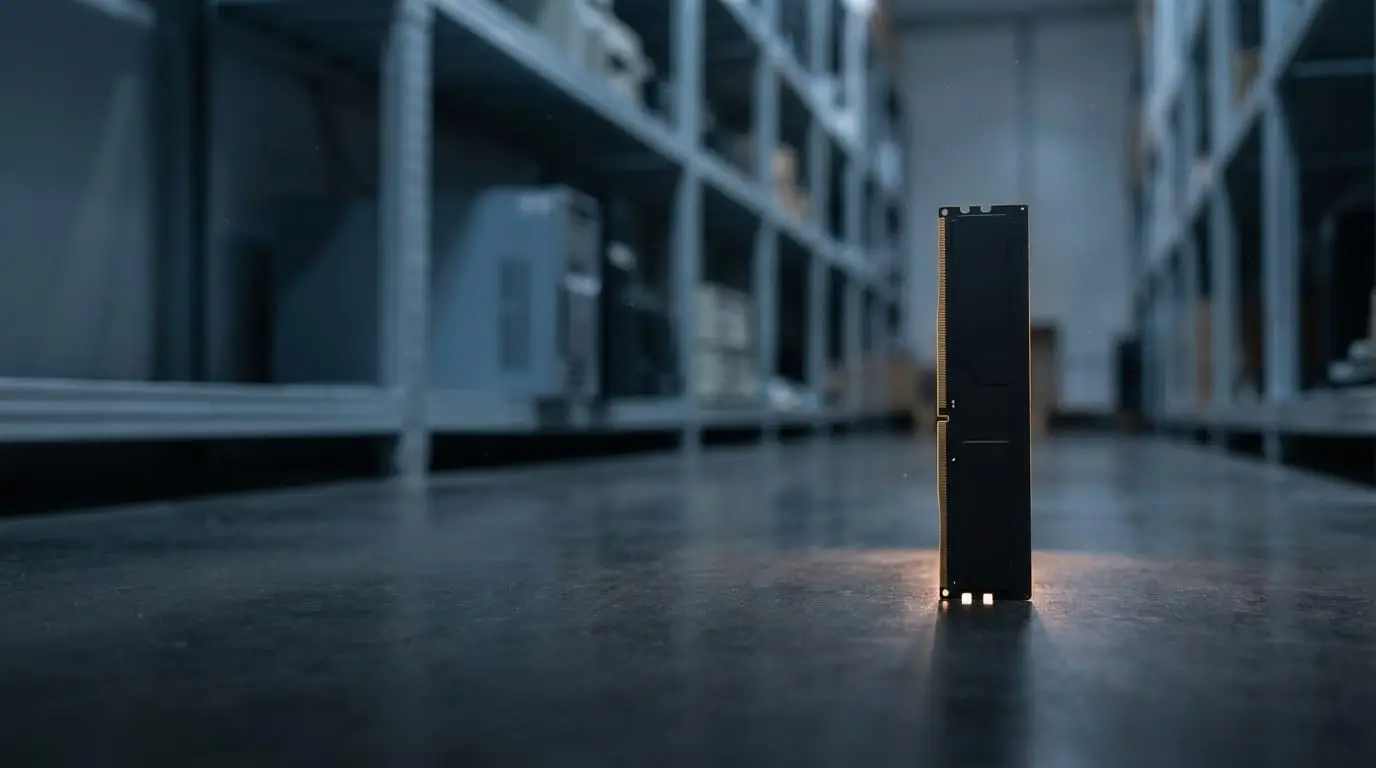
RAM is now one of the most expensive components in a computer, and the shift happened in under a year. Retail trackers put a mainstream 32GB DDR5 kit at roughly $390 to $400 in August 2026, against something closer to $100 to $140 in the same period of 2025. A 32GB DDR5 kit that cost around $110 to $140 a year ago now runs roughly $390 to $400, and mainstream kits were listed between about $380 and $589 in mid-August 2026.
The short version: AI data centres are buying memory faster than the world can make it, and the three companies that make almost all of it have pointed their factories at the customers paying the most. Everyone else is bidding for what is left over.
How big the RAM price hike actually was
The increases arrived in waves rather than a steady climb.
TrendForce found that conventional DRAM contract prices rose roughly 93% to 98% quarter over quarter in the first quarter of 2026, lifting total memory industry revenue 81% to $97 billion, and forecast a further 58% to 63% increase for the second quarter. Those are contract prices, the ones manufacturers negotiate in bulk. Retail follows a few weeks or months behind, which is why shelf prices kept climbing even during quieter news cycles.
The third quarter finally slowed. TrendForce projected conventional DRAM contract prices rising 13% to 18% quarter over quarter in 3Q26, with NAND flash up 10% to 15%, noting that PC and smartphone customers had reached the limit of what they can absorb. That deceleration is worth reading carefully. The cooldown came from manufacturers being unwilling and unable to pass on further increases, not from supply improving.
Nothing got cheaper. The rate of getting more expensive got smaller.
DDR4 did not escape
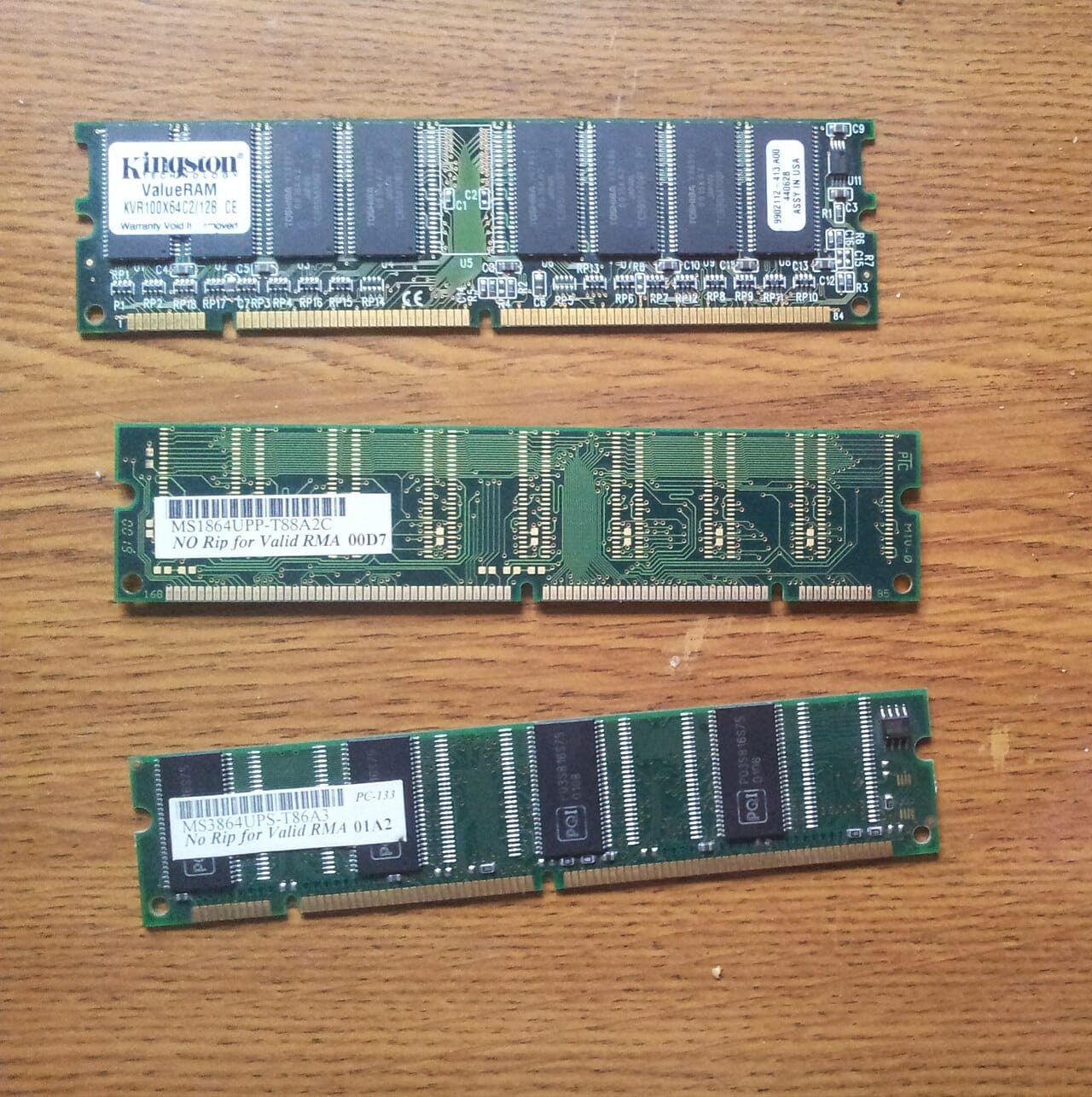
Older memory has been hit as hard as new memory, in some cases harder. Tom's Hardware tracking showed 32GB DDR4 kits moving from about $60 to $90 in October 2025 to roughly $150 to $180 by January 2026. The squeeze has even reached genuinely legacy parts: TrendForce estimated DDR2 contract prices rising 55% to 60% in 2Q26 and another 35% to 40% in 3Q26, as buyers turned to older-generation components to secure any allocation at all, while the big three suppliers prioritised advanced-node production for HBM and server DRAM.
If you were holding out on an older platform to avoid a DDR5 upgrade, that plan stopped working.
Why RAM prices went up
Three forces stacked on top of each other. None of them resolves quickly.
AI accelerators eat memory capacity
High-bandwidth memory (HBM) is the stacked DRAM that sits alongside AI accelerators. It sells for far more per wafer than the memory in your laptop, and it consumes several times the manufacturing capacity per gigabyte shipped. Every wafer redirected to HBM removes a multiple of that capacity from the ordinary DDR5 pool. TrendForce noted that ongoing capacity reallocation toward server applications is directly reducing what is available for PC DRAM, with notebook retail prices rising as higher component costs work through inventory.
The industry underinvested before the boom
Memory is cyclical, and the previous cycle was brutal. Samsung cut production by roughly half during the 2022 to 2023 downturn, and the industry invested little in new capacity through 2024 and into early 2025, leaving it poorly positioned when AI demand surged. A memory fab takes years to build and qualify. The decisions that determined 2026 supply were made in 2023.
Long-term deals locked up the remaining supply
Hyperscalers moved early and bought forward. DigiTimes reporting indicated that Samsung, SK hynix and Micron have effectively sold their entire 2027 DRAM and HBM capacity, with no additional supply planned, meaning consumer DRAM availability in 2027 will be significantly tighter than in 2026. Consumer memory is not competing on price so much as competing for leftovers.
Who actually pays for the RAM price hike
Almost everyone, but unevenly.
Desktop builders feel it most directly, because they buy memory as a visible line item. Gartner projected memory rising from 16% to 23% of a PC's total bill of materials in 2026, pushing PC prices up 17% against 2025 and eliminating the sub-$500 PC entirely by 2028, with global shipments falling 10.4% this year.
Laptop and phone buyers pay in two currencies: money and specifications. Apple raised prices on MacBooks and iPads to pass through higher memory costs, describing the shortage as an unprecedented challenge, while Best Buy told reporters it expects its computing division to be the most affected. The subtler cost is de-specification. Analysts quoted by Consumer Reports expect manufacturers to hold familiar $599 and $799 price points by quietly cutting specifications, so a 2026 laptop may look identical to its 2025 equivalent while shipping 8GB of RAM instead of 16GB. Lower memory configurations have already returned to affordable notebooks.
Budget buyers get hit hardest of all. IDC notes memory is roughly 10% to 20% of the cost of building a smartphone, which leaves low-margin Android makers such as Xiaomi, Oppo and Vivo most exposed, while higher-margin vendors like Apple and Samsung are better insulated. Many PC makers were bracing for prices 15% to 20% higher from the second half of 2026. Thin margins mean nowhere to absorb the cost.
It does not land evenly across markets
The underlying contract prices are global, but what you pay is not. In the US, retail memory prices moved fastest and most visibly, because kits are commonly sold unbundled to self-builders. Across the UK and the EU, the increase arrives layered under VAT-inclusive shelf pricing and stronger consumer-guarantee rules, so it shows up more often as quiet specification downgrades on prebuilt machines than as a headline price change. In Canada and Australia, where most hardware is imported and priced against the US dollar, currency movement can add to or partially mask the underlying increase. If you are comparing prices against a review written for another market, adjust before assuming you are being overcharged.
When will RAM prices come down?
Not this year, on current guidance from the manufacturers themselves.
Samsung's memory chief warned in its April 2026 earnings report that significant shortages across memory products would continue through at least 2027, mirroring comments from SK hynix a week earlier, with demand fulfilment rates falling to record lows as customers rushed to secure future supply. SK hynix's chief executive went further, telling Reuters that 2027 would be the industry's worst year for supply and that demand could exceed capacity even beyond 2030.
New capacity is coming, but slowly. SK hynix's board approved roughly $38 billion in August 2026 for two new fabs, whose cleanrooms are not scheduled to open until December 2028 and June 2029. Current supply forecasts point to elevated memory prices through 2027, with meaningful capacity additions not expected until late 2027 or 2028.
Analyst estimates cluster in the same window. IDC expects prices to stabilise by mid-2027, Counterpoint Research has identified the fourth quarter of 2027 as the earliest inflection point, and Intel's chief executive has suggested there will be no relief until 2028.
"Stabilise" is the operative word. These forecasts describe prices stopping their climb, not returning to 2025 levels.
What to do if you need memory right now
Practical guidance, given that waiting for a price crash is not a strategy this year.
Confirm memory is actually your bottleneck. Check your system's memory usage under your real workload before spending. If you are not consistently near capacity, storage speed or thermal throttling may be the real problem, and both are cheaper to fix.
Buy the capacity you need, not the capacity you aspire to. The old advice to over-provision because RAM is cheap no longer applies. Doubling capacity now costs real money.
Check whether your machine takes DDR4 or DDR5 before shopping. The two are not interchangeable, and the price gap between them has narrowed to the point where you cannot assume the older standard is the budget option.
If you are buying a complete machine, read the specification sheet line by line. The same model number and price as last year may now carry less memory or slower storage.
Buy sooner rather than later if the purchase is unavoidable. Suppliers continue shifting capacity toward server and HBM applications, and tightening 2027 supply is expected to keep contract prices from falling back.
Do not panic-buy an entire build. Elevated prices are not a bubble that pops next quarter, and stockpiling components you will not use for a year ties up money in depreciating hardware.
FAQ
Why are RAM prices so high in 2026?
Memory manufacturers have redirected production capacity toward high-bandwidth memory and server DRAM for AI data centres, which are far more profitable than consumer memory. That leaves less capacity for ordinary DDR4 and DDR5, and the shortfall arrived after several years of low industry investment in new fabs.
Will RAM prices go down in 2027?
Most forecasts point to prices levelling off rather than falling. IDC expects stabilisation around mid-2027 and Counterpoint points to late 2027 as the earliest inflection point, while SK hynix's chief executive has called 2027 the industry's worst year for supply.
Is DDR4 still the cheap option?
Not reliably. DDR4 kits roughly doubled between late 2025 and early 2026, and manufacturers have been winding down DDR4 production, which pushes prices on remaining stock higher. Check current prices for both standards rather than assuming.
Should I buy RAM now or wait?
If you have a genuine need, buying now is usually the better call, since supply guidance points to tight conditions through 2027. If the upgrade is optional, waiting costs you little because prices are unlikely to collapse in either direction.
Will my next laptop or phone cost more because of this?
Probably, or it will offer less for the same money. Apple has already raised MacBook and iPad prices, and rising memory costs are expected to reduce global PC shipments by 10.4% and smartphone shipments by 8.4% in 2026.
The bottom line
The 2026 RAM price hike is a supply story, not a retailer story. Memory got expensive because the most profitable customers in the industry can outbid everyone else for the same factories, and because nobody built enough factories when it was cheap to do so. Neither of those conditions reverses on a quarterly timescale.
The practical response is unglamorous: work out what you actually need, buy that, and stop treating memory as the component you overspend on because it used to be free. If you want to time a purchase, watch the quarterly contract price forecasts from research firms like TrendForce, because retail follows them with a lag of a month or two.
Prices and forecasts in this article reflect market data available at the time of publication. Memory pricing moves quickly, so check current retail listings before making a purchase decision.
Keep reading

AI in healthcare 2026: uses, costs, evidence
AI in healthcare by the numbers: who uses it, what ambient scribes cost, how many devices the FDA lists and where it has fallen short. See the data.
Supun BandaraOctober 10, 202617 min read

Conversational AI for customer service in 2026
Conversational AI for customer service explained: how it works, what Fin, Zendesk and Agentforce charge, and where it still fails. Compare the costs.
Supun BandaraSeptember 28, 202615 min read

AI coding assistant pricing compared in 2026
AI coding assistant pricing compared for 2026: Copilot, Cursor, Claude Code and Codex, with what each plan's included usage is actually worth in dollars.
Supun BandaraSeptember 4, 202610 min read