Who's covered when someone else drives your car
Lending your car? Cover depends on the country. How permissive use, named drivers and unlisted driver excesses work in the US, UK, Canada, Australia and the EU.
By Supun Bandara · September 3, 2026 · 11 min read
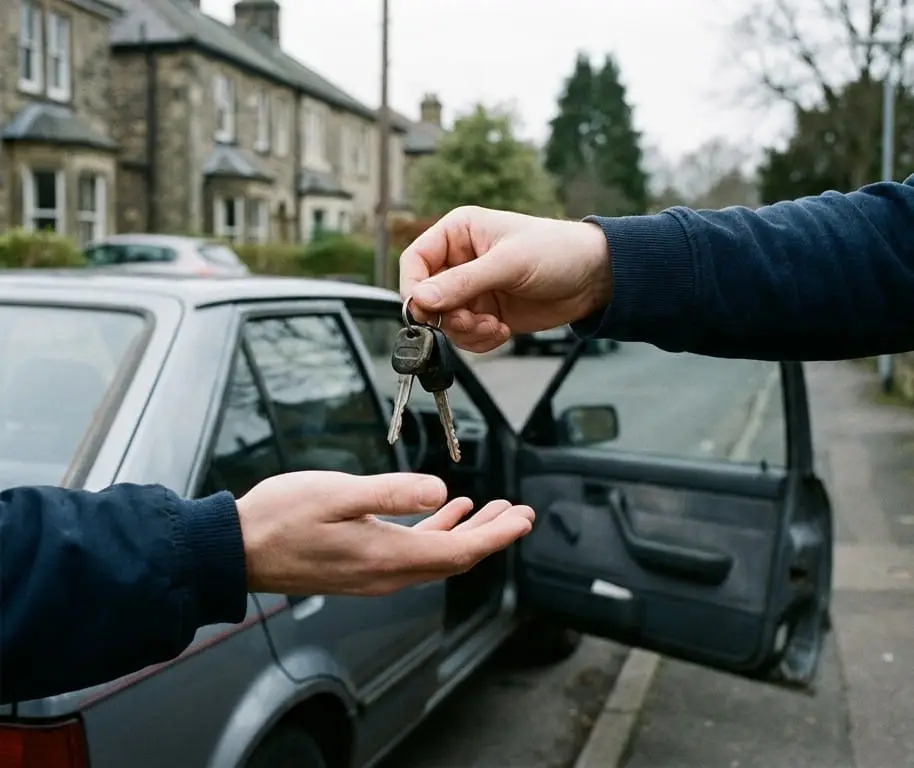
The short version
Whether your friend is covered to drive your car depends less on your friendship and more on which country you are standing in. In the United States, Canada, Australia and most of the EU, the insurance is attached to the car, and a licensed driver with your permission is usually covered by default. In the United Kingdom, it is attached to a certificate that names people, and permission on its own is worth nothing.
That single difference is behind most of the arguments that happen at the roadside after a borrowed car gets damaged. The rest of this article works through each market, then answers the question the comparison sites tend to skip: once the claim is paid, whose premium goes up.
Why the same question has different answers
Motor insurance solves the same problem everywhere, which is making sure an injured third party gets paid. Countries just chose different places to hang the policy.
The vehicle-based model says the car is insured, and anyone the owner allows to drive it inherits that cover, with conditions. The driver-based model says a named person is insured to use a particular car, and anyone not named is uninsured no matter who gave them the keys.
Almost everything else follows from that. In vehicle-based markets the argument after a crash is about how much extra you pay. In the UK it is about whether the driver committed a criminal offence.
United States: permission is the line that matters
American personal auto policies generally follow the car. If a licensed driver borrows your vehicle with your permission, they are covered under what the industry calls permissive use, and your liability coverage responds first if they cause a crash.
Three details do the damage:
Your limits are the exposure, not theirs. If the borrower causes $200,000 of injuries and you carry $50,000 of bodily injury cover, the gap is a problem for both of you. Some insurers go further and apply only the state minimum limits to a permissive driver rather than the full limits shown on your policy.
Excluded drivers are never covered. A signed exclusion endorsement removes that person completely, whatever you said on the day. Not every state permits this: Kansas, Michigan, New York, Virginia and Wisconsin prohibit named driver exclusions outright, and several other states ban spousal exclusions or require the excluded person to hold their own policy first.
Occasional is not regular. Permissive use is built for the friend who borrows the car twice a year. Anyone who drives your vehicle regularly should be listed on the policy, even if they live somewhere else, and a licensed adult living in your household almost always has to be declared.
Your own policy does not travel with you into a car you do not own in the way people assume, either. Check whether you have non-owner or extended coverage before you rely on it.
United Kingdom: permission is not cover
The UK works the opposite way round, and this catches out drivers arriving from anywhere else. Section 143 of the Road Traffic Act 1988 requires the use of the vehicle to be insured for the person driving it. Handing over your keys does not create that cover.
There are three legitimate routes:
Be added as a named driver on the owner's policy. This is the normal answer, and it is usually free or cheap to do for a short period.
Rely on driving other cars (DOC) cover, if the borrower's own comprehensive policy includes it. DOC typically provides third-party cover only, so it pays for injury or damage the driver causes to others, but nothing for damage to the borrowed car itself. It usually requires the driver to be the policyholder, aged 25 or over, with the owner's permission, and the borrowed car separately insured. It has also become rare: it was once a common feature of comprehensive policies, and most insurers no longer include it. If your certificate does not say you have it, you do not have it.
Buy temporary cover by the hour, day or week. This is now the cleanest option for a one-off, and it leaves the owner's policy untouched.
Getting it wrong is a criminal matter rather than a coverage dispute. Driving a vehicle you are not insured to drive carries a £300 fixed penalty and six penalty points, an unlimited fine and possible disqualification if the case reaches court, and police can seize and in some cases destroy the vehicle.
Canada: covered by the car, unless someone signed a form
Canadian auto insurance also follows the vehicle, so lending your car to a licensed friend with permission normally means your policy responds. Two provincial endorsements are worth knowing about, using Ontario's naming as the example, because other provinces have close equivalents.
OPCF 27 can extend physical damage cover to a vehicle you drive but do not own, which is the endorsement that matters when you are the borrower and the owner only carries liability.
OPCF 28A is the one that ends conversations. It formally excludes a named person from the policy. Ontario's Compulsory Automobile Insurance Act treats the vehicle as uninsured while an excluded driver is operating it, and both the owner and the excluded driver can be personally responsible for the damage or injuries caused. Households sign these to keep a high-risk driver's premium off the policy, then forget they exist.
Because auto insurance is regulated provincially, the detail shifts across the country, and the public insurers in British Columbia, Saskatchewan and Manitoba run their own rules. Check with your provincial insurer or regulator rather than assuming Ontario's answer applies.
Australia: covered, but check what the excess stacks to
Australian comprehensive policies commonly cover a licensed driver you have allowed to use the car, whether or not they are listed. The catch is the excess, which is where the real money sits.
AAMI, for example, covers unlisted drivers but applies increased excesses if the driver is not an experienced driver, defined as someone over 25 who has held the relevant licence for two or more consecutive years. NRMA Insurance applies an undisclosed age excess to any unlisted driver with less than two years of experience regardless of age, and in Western Australia, South Australia and the Northern Territory an undisclosed driver excess applies to all unlisted drivers on top of the basic excess.
These stack. Basic excess, plus age excess, plus unlisted driver excess, and the unlisted driver component alone commonly runs from several hundred dollars to a few thousand, depending on the insurer and the driver's age. A claim you expected to cost $800 can arrive at $2,500.
Compulsory Third Party cover for injury (the green slip in New South Wales, CTP in South Australia, MAI in the ACT) attaches to the vehicle and is not affected by who is driving. Your Product Disclosure Statement is the only document that settles the excess question, and ASIC's Moneysmart guidance is a neutral starting point for reading it.
Europe: the car is insured, the clauses are the catch
Every car registered in an EU country must carry third-party liability insurance, and that compulsory cover is valid in all other EU countries, though it does not extend to repairs to your own vehicle. The cover attaches to the registered vehicle, so lending it is normal and expected.
France shows how the fine print works. Occasional lending, known as prêt de volant, is usually permitted. Many insurers apply an increased excess when a borrowed-car accident is the driver's fault, and the owner's own bonus-malus rating takes the hit rather than the borrower's. Some contracts also carry an exclusive driving clause, which restricts or forbids lending the car entirely, and regular use by someone else means declaring them as a secondary driver. Similar structures appear across the continent under different names.
Who pays, and whose premium goes up
Here is the part that stays true in all five markets, and the part most guides leave out.
The claim lands on the owner's policy, not the borrower's. Whether it is a US permissive-use claim, an Australian excess, a French malus or a UK named-driver accident, the person who owns the car owns the claims history. Accidents that happen while someone else is driving can affect your no-claims discount and your future premium, and the borrower walks away with a clean record.
The borrower's insurance is usually secondary, not absent. In the US, if damages exceed the owner's limits, the driver's own liability cover may pick up the remainder. In the UK, DOC cover pays third parties only, so damage to the borrowed car falls back on the owner's comprehensive policy and the owner's excess.
The excess is the owner's bill. Almost nobody agrees who pays it in advance. Agree it before you hand over the keys, not from the roadside.
Where injuries are involved and the amounts run past the policy limits, the dispute stops being an insurance question and becomes a liability one, which is the point at which it is worth knowing when a personal injury lawyer is needed after a car accident and who they would be acting against.
Before you hand over the keys
A short check that works in any of these markets:
Read the certificate or declarations page for the words that define who may drive. In the UK that is the certificate itself, in Australia the PDS, in Canada the endorsement list, in the US the named insureds and any exclusions.
Ask whether any driver has ever been formally excluded, and check whether an old exclusion is still sitting on the policy.
Ask whether the borrowing is occasional or about to become regular. Regular use is the trigger that turns cover into a dispute everywhere.
Check the total excess that would apply with this specific person driving, including age and inexperience loadings.
If the answer is unclear and the trip matters, buy temporary cover or add them properly. It costs less than one denied claim.
The habit is worth carrying across your other policies too. The gap between what people believe they bought and what the wording actually says is the same gap that makes the difference between term and whole life insurance worth understanding before you sign anything.
The mistake that is fraud, not a technicality
One rule is identical across every market covered here: the person who actually drives the car most must be recorded as the main driver.
In the UK this is called fronting, most often a parent listing themselves as the main driver on a car their teenager actually uses. If it is discovered, the insurer can refuse all or part of a claim, cancel the policy, and the driver can face prosecution for fraud, which brings a criminal record and years of difficulty getting insured. The US version is misrepresenting a household driver, the French version is failing to declare a conducteur secondaire, and the consequences rhyme: the policy can be treated as though it never existed.
Adding an experienced driver to a young driver's policy is legal and often sensible. Reversing who is named as the main driver is not.
FAQ
Does my own insurance cover me to drive someone else's car?
In the US, usually not automatically, though some policies extend limited cover to non-owned vehicles. In the UK, only if your comprehensive policy specifically includes driving other cars, which is now uncommon and third-party only. In Canada, an endorsement such as OPCF 27 can cover damage to a vehicle you drive but do not own. Read your own documents rather than assuming.
Can someone drive my car if they are not on my insurance?
In the US, Canada, Australia and most of the EU, usually yes, with your permission and subject to exclusions and higher excesses. In the UK, generally no, unless they hold driving other cars cover or buy temporary insurance.
Who pays the excess if a friend crashes my car?
Contractually the policyholder does, because it is your claim. Any repayment from your friend is a private arrangement, so agree it in advance.
Will lending my car affect my no-claims discount?
Yes, if the claim is at fault. The claim attaches to your policy and your record, not the borrower's, in every market covered here.
Is one-day insurance actually worth it?
For a single trip in someone else's car, usually yes. It costs a fraction of an uninsured driving penalty in the UK, and it leaves the owner's no-claims discount untouched elsewhere.
The bottom line
Permission and cover are two different things, and only one of them is written down. Before someone else drives your car, find the sentence in your policy that names who may drive it and what happens if they do. It takes five minutes and it is the difference between an excess and a personal liability.
Keep reading

Home Insurance Dropped for Wildfire Risk in US?
Insurers are dropping homes over wildfire risk at record rates. What a non-renewal notice really means, and the steps that get you covered again in 2026.
Supun BandaraAugust 31, 202610 min read20 views

Is Pet Insurance Worth It in 2026? Cost, Claims & Coverage
Is pet insurance worth it in 2026? Premiums are rising alongside vet costs, and only a third of owners come out ahead on paper, yet most still say it was worth buying. Here is what a policy actually costs in the US and UK, what's covered and excluded, and when your money is better off in a savings account instead.
Supun BandaraJuly 1, 20269 min read16 views

Term vs Whole Life Insurance: Which Is Worth It in 2026?
Term vs whole life insurance — which is actually worth it? Compare real 2026 costs, cash value, and the "buy term and invest the difference" strategy. Learn when cheap term coverage beats permanent whole life, when whole life genuinely makes sense, and how to pick the right policy for your family and budget.
Supun BandaraJune 16, 20268 min read6 views